Search

Saved articles

You have not yet added any article to your bookmarks!

Browse articles
Newsletter image

Subscribe to the Newsletter

Join 10k+ people to get notified about new posts, news and tips.

Do not worry we don't spam!

GDPR Compliance

We use cookies to ensure you get the best experience on our website. By continuing to use our site, you accept our use of cookies, Privacy Policy, and Terms of Service.

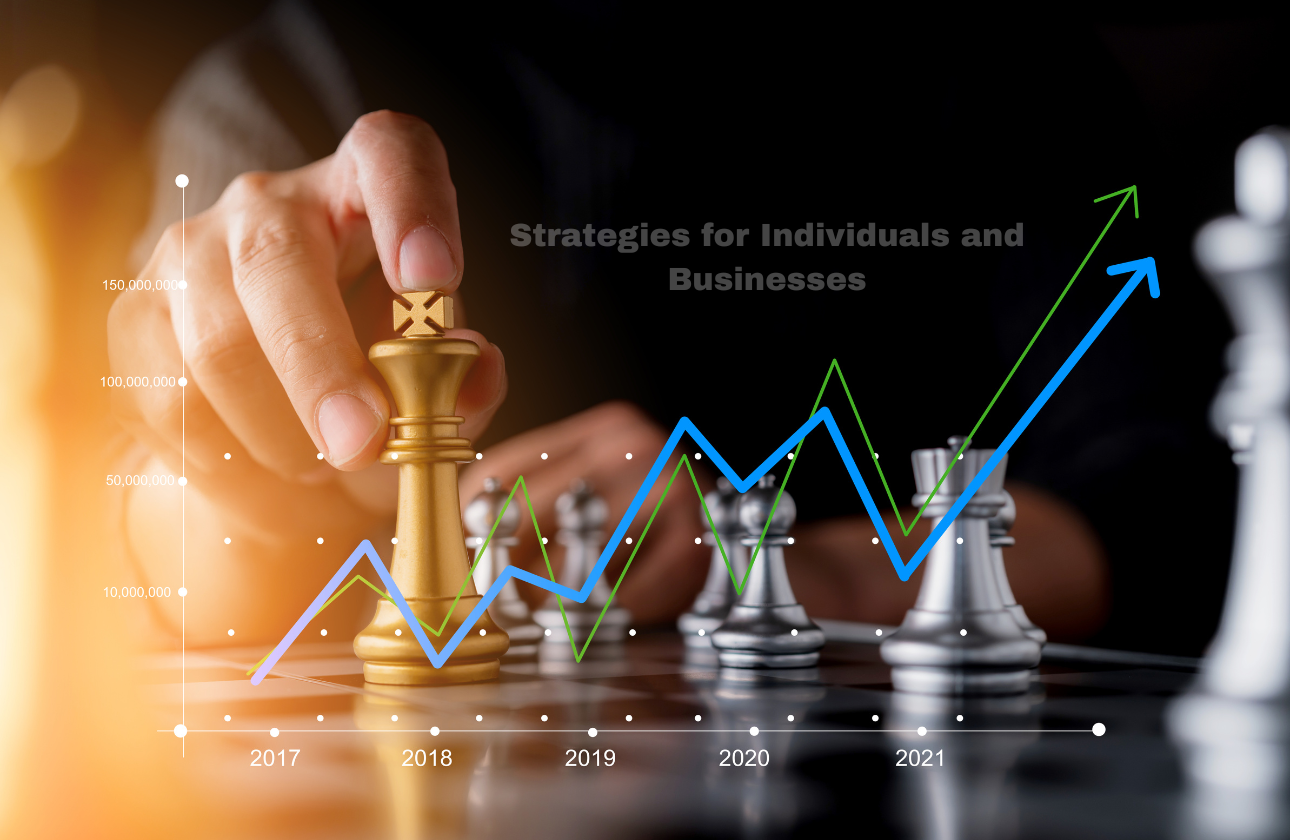
Navigating Inflation: Strategies for Individuals and Businesses

Navigating Inflation: Strategies for Individuals and Businesses

Inflation, the gradual rise in the prices of goods and services over time, affects everyone. From individuals managing household expenses to businesses striving to maintain profitability, inflation can disrupt budgets, reduce purchasing power, and create financial uncertainty. However, with strategic planning and informed decision-making, both individuals and businesses can effectively navigate the challenges posed by inflation.

Understanding Inflation

Inflation occurs when the demand for goods and services exceeds their supply or when production costs, such as wages and raw materials, increase. Central banks, like the Federal Reserve, often use interest rates as a tool to control inflation. While moderate inflation is considered a sign of a healthy economy, excessive inflation can erode savings and cause significant financial strain.

Strategies for Individuals

1. Budget Wisely

Adjusting your budget to account for rising costs is essential. Prioritize essential expenses, cut down on non-essential spending, and track where your money is going.

2. Build an Emergency Fund

An emergency fund acts as a financial cushion during uncertain times. Aim to save at least three to six months' worth of living expenses.

3. Invest in Inflation-Protected Assets

Consider investments such as Treasury Inflation-Protected Securities (TIPS) or assets like gold and real estate, which historically retain value during inflation.

4. Reduce Debt

High-interest debt can become even more burdensome during inflationary periods. Focus on paying off credit cards and other high-interest loans as soon as possible.

5. Enhance Income Streams

Look for opportunities to increase your income, whether through side businesses, freelance work, or investing in skill development for better career opportunities.

Strategies for Businesses

1. Adjust Pricing Strategically

Businesses must carefully evaluate their pricing strategies. Incremental price adjustments can help offset rising costs without alienating customers.

2. Optimize Supply Chains

Diversify suppliers and negotiate long-term contracts to lock in stable prices for raw materials.

3. Increase Operational Efficiency

Streamline operations, reduce waste, and invest in technology to improve productivity and reduce costs.

4. Focus on Cash Flow Management

Maintain a healthy cash flow by monitoring receivables, managing payables, and ensuring liquidity.

5. Innovate and Differentiate

Offer unique products or services that provide value to customers, reducing the pressure to compete solely on price.

The Role of Policy and Adaptability

Government policies and economic reforms also play a crucial role in mitigating inflation's impact. Staying informed about changes in taxation, subsidies, and interest rates can help individuals and businesses plan more effectively.

Prev Article
Discovering the Enchantment of New Zealand's South...
Next Article
Building Stronger Relationships: The Power of Comm...

Related to this topic:

Comments (0)

Leave a Comment